



Sponsors

Donate

Without your support, Drunken Boat could not exist.

Please donate today.

Calls for Submissions

Drunken Boat seeks work for a special section: Librotraficante and the New Latino Renaissance.

In solidarity with the Librotraficante movement, sparked by Arizona’s HB2281 and the Tucson Unified School District’s resulting ban of Mexican American Studies, Drunken Boat seeks work by creators of fiction, nonfiction, poetry, spoken word, and experimental/mixed media that honors our country’s Latino heritage. The portfolio embraces quantum demographics, which, in the words of Librotraficante founder Tony Diaz, “pinpoint and celebrate the bridges that already exist between us.” Submissions will be considered through this lens of cultural intersection as it pertains to the New Latino Renaissance. Submit

Drunken Boat seeks poems that engage with debt: the friction between desire and limits, the intersection of ownership and obligation.

Poems need not be limited to the political. Special attention will be given to work that considers form when exploring this theme. Limit three poems. Submit

Click here for more details.

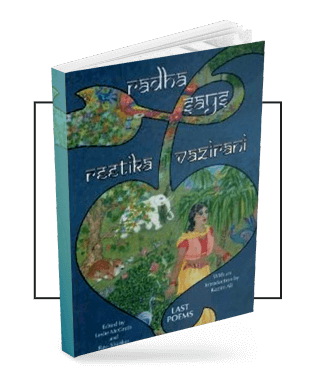
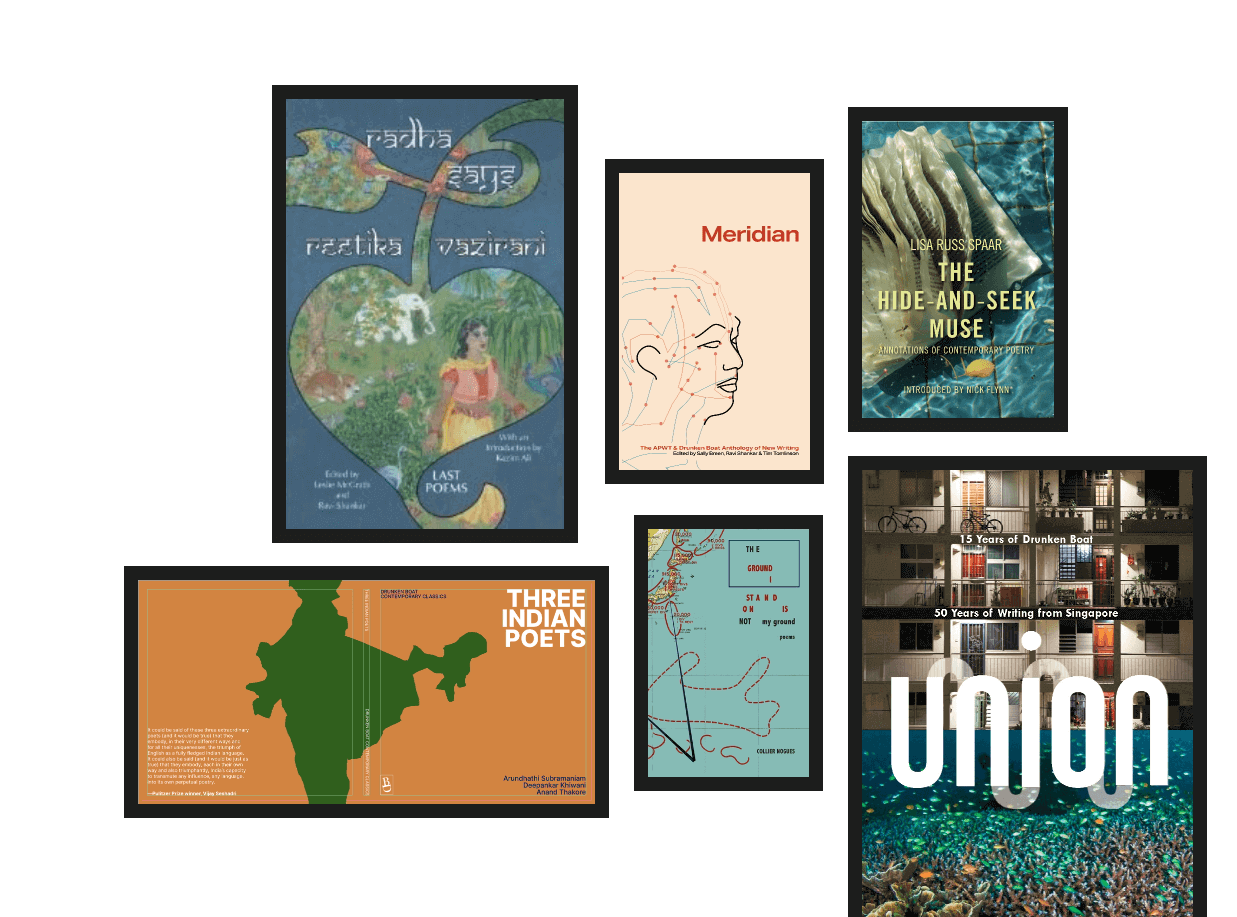
Radha Says

The final collection by award-winning poet Reetika Vazirani, published by Drunken Boat.

Excerpt | Purchase | Review

Follow drunken_boat on Twitter


Search

Subscribe to DB

First Name
Last Name
Email
Confirm your email address
Preferred format for emails:
Text HTML

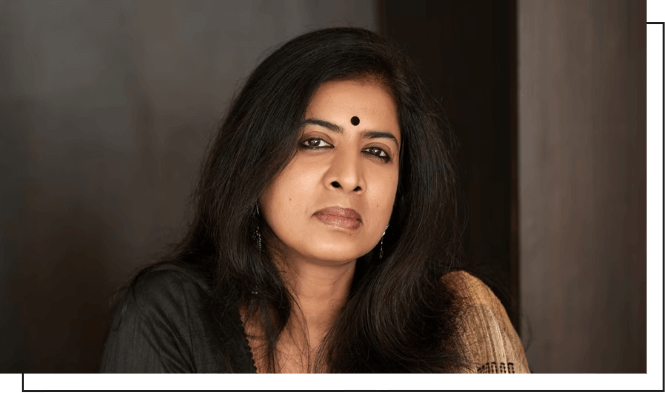
by Jen Besemer


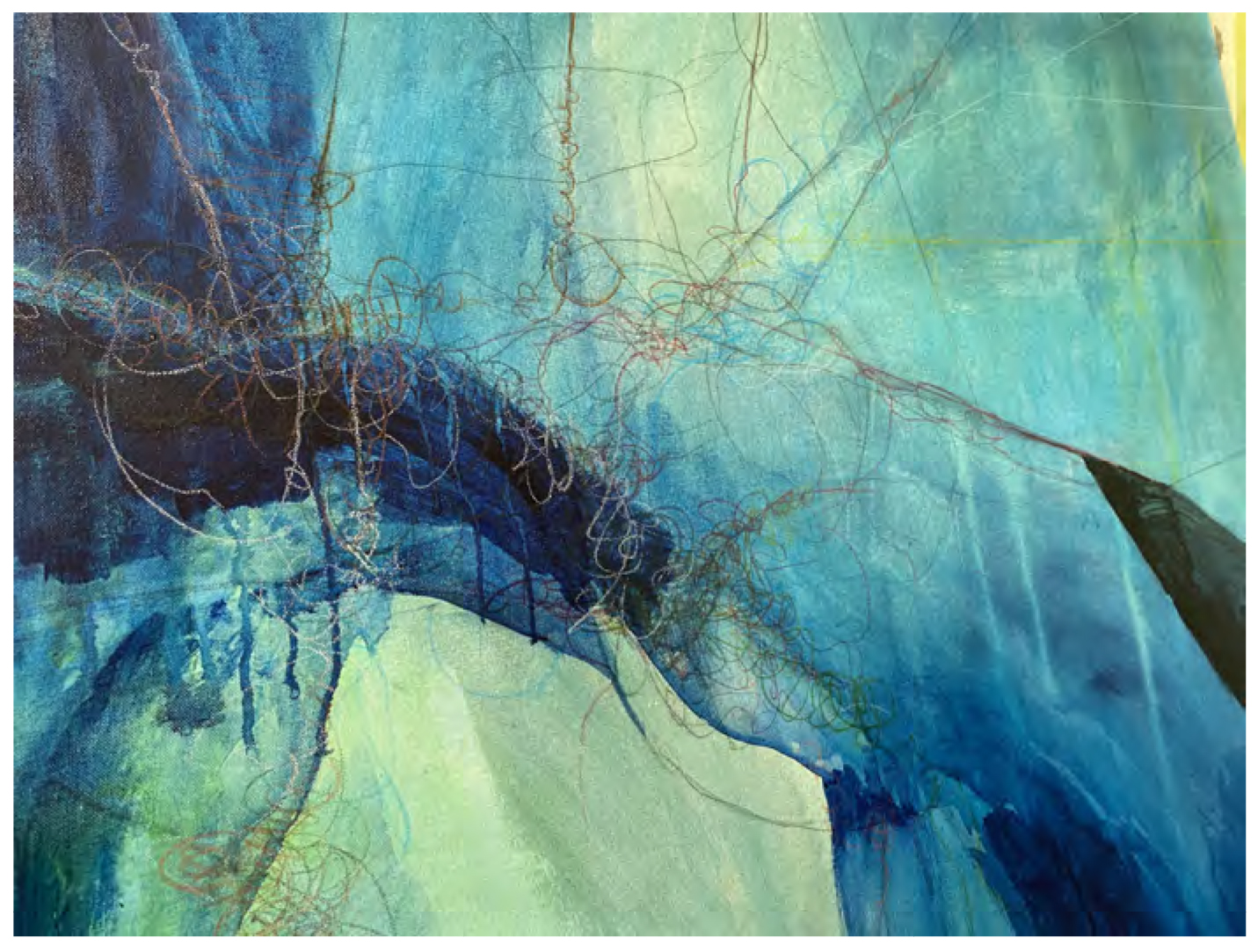
I talk a lot about my methods of making poems and images from source materials I collect and alter.  But I don’t say much about what happens when I set out to write a poem.  These days I tend not to make poetry without the aid of some kind of tangible source, but when I do, I’m often surprised that it comes out looking and sounding much the same as the sourced poems!  What’s going on there? Is it something to do with the way my brain works?  Does my mind just naturally…collage?

There’s nothing unusual in pulling one’s material from words and phrases that are  “in the air”–where does absorption end and appropriation begin?  I believe that all poets do this to varying degrees, and that work coming from “inside” or from “personal experience” is actually–or is also–a result of an extended collage process.  The difference is in the degree of emphasis on that process, and in the degree to which the product preserves the traces of that process.  Plenty of poets who work from collage-mind disguise its most obvious residues.  I’m not one of those.  I like to cast my collage-mind in high relief, and I like my finished work to retain that glorious bumpiness.

To a large degree my poetic process is curatorial.  With use of source texts, the arrangement of letters, words/phonemes and phrases and the synthesis of a new poem both take place outside of me–the thinking is mine and internal, but the action is external, and my ability to influence meaning (or, more accurately, the audience’s experience) is lesser.  For collage-mind written poetry, the processes of curation and synthesis of a new whole take place within me, and–perhaps because I do not have the intermediary of a source text–feel more directly accountable to the audience.  I don’t mean that I’m any more concerned with accessibility or legibility in this work than in the sourced work.  I mean that text-only poems operate on fewer dimensions than purely visual or hybrid text/image (etc.) poems.  My conscious involvement in the audience’s experience is more direct in text-only written poems because there are fewer variables at work in that experience.

My unsourced poems often take the forms of different types of “functional” or informative text.  The mimicry of this type of text, and the appropriation of its formal characteristics for other (poetic) purposes, are parts of a deliberately subversive process.  I mean to expose the artificial nature of such text.  Functional/informative text is privileged in our current social moment, and it is the subject of relatively little cultural critique or analysis.  My mimic-poems pretend to occupy the same authoritarian language territory as the model texts.  Currently, most of my mimics sit in sites of academic authority–word problems, bibliographic citations, captions.  But I increasingly appropriate (or seem to appropriate) language of capitalist authority within the academic forms.  For instance, I may employ the cadence and rhetoric of ad copy in a citation poem.  This type of blended mimicry points to the extreme saturation of academic authoritarian language by the language of capitalist authority–through the priorities, paradigms and purposes inherent in such language.

Opening the mimic poem process up to collage-mind allows me to more fully destabilize those standardized forms.  This is my version of the concern for “accessibility” in poetry; I deliberately craft texts that push audiences out of their bodies of knowledge.  Audiences encountering a word problem poem bring to the encounter a wealth of previous experience with genuine word problems, both positive and negative (or indifferent).  The training they may have received in approaching such texts may kick in, determining their expectations of the piece.  Such expectations are soon shattered by what they find (the probability of encountering velociraptors while dumpster diving; philosophical and social considerations of tea consumption and carbon monoxide poisoning in the Russian rail system; wasp-infested canoes).  By tweaking the expectations we share–our consensually-constructed sociocultural limitations–I hope to encourage myself and my audience to ask why we set these limits in the first place–and how they work, if they work at all.


*   *   *   *


Jen Besemer is the author of several attractive and fuel-efficient volumes of poetry, ranging from compact to full-sized, including Quiet Vertical Movements, Ten Word Problems, Telephone and Object with Man’s Face (both forthcoming late 2013). Jen’s recombinant poetry projects are also represented in Troubling the Line: Trans and Genderqueer Poetry and Poetics. For more information, visit www.jenbesemer.com.

Bookmark and Share

Published Jan 10, 2013 - Comments Off

I’m afraid that it is now that time of the academic year when my reading life is just a relic of earlier hopes, and all here is in one state of disrepair or another, but here are the books that I have bookmarks in: Lyn Hejinian’s The Book of a Thousand Eyes; a new collection simply titled Three Poets from Minus A Press that includes new work from John Ashbery, Timothy Donnelly, and Geoffrey G. O’Brien; Maurice Blanchot’s The Writing of the Disaster; Kenneth Cox’s Collected Studies in the Use of English; Spenser’s Mutability Cantos; and for a bit of escape at night, Hilary Mantel’s Wolf Hall.

Bookmark and Share

Published Dec 20, 2012 - Comments Off

Congratulations to Shira Dentz, whose poem “a woman all about love yesterday.” was selected by the Academy of American Poets, as part of their Poem-A-Day project (on December 13). Shira is Drunken Boat’s Reviews Editor; her books include black seeds on a white dish and Leaf Weather.


Bookmark and Share

Published Dec 16, 2012 - Comments Off

At the moment I am reading or rather as user interacting on screen with Illya Szilak’s multi-media digital novel: Reconstructing Mayakovsky. (See her Huff-Post blog: “The Death of the Novel: How E-Lit Revolutionizes Fiction”). I am reading & rereading the PDF of Sarah Gridley’s Loom (Omnidawn, April 2013), a gorgeous book-length pastoral meditation/postmodern allegory — “rouging silver and wildly cold.” I stare at the photographs, illustrations & text of Tan Lin’s uncanny memoir Insomnia and the Aunt (Kenning Editions) — “As any mathematician can tell you, lovers like drapes are feeble signs of a light that can’t come in, for the minute a TV show or a person becomes memorized (the worst form of recognition), it or she ceases to exist in any meaningful way. A dumb TV show is the most beautiful TV show.” I am also rereading three books: John Stilgoe’s elegant & profound essay Shallow Water Dictionary: A Grounding in Estuary English — “In the shallows the oarsman pulls precisely.” Kafka’s Blue Octavo Notebooks – “Evil is the starry sky of Good.” & Wittgenstein’s On Certainty — “If a blind man were to ask me ‘Have you got two hands?’ I should not make sure by looking.”

Bookmark and Share

Published Dec 06, 2012 - Comments Off

Dear Friends and Supporters of Drunken Boat,

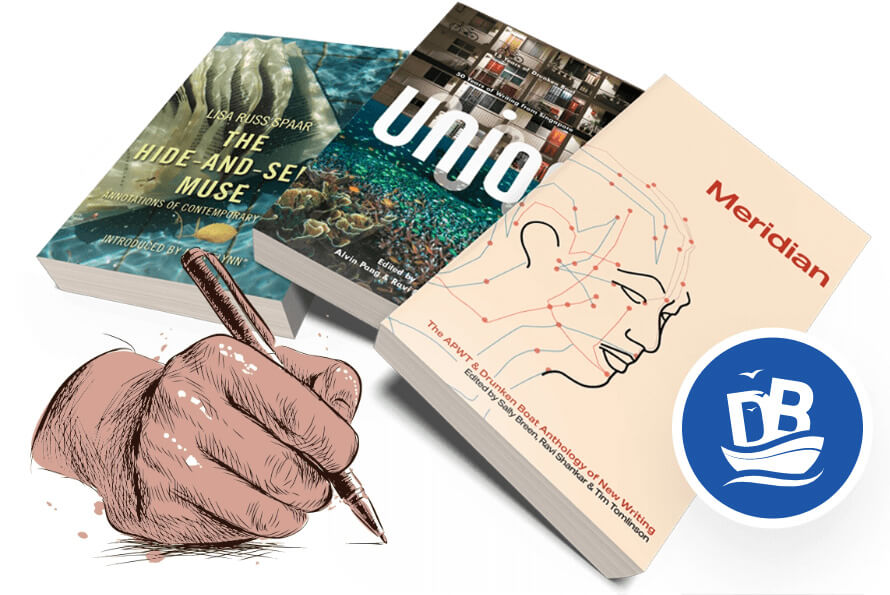
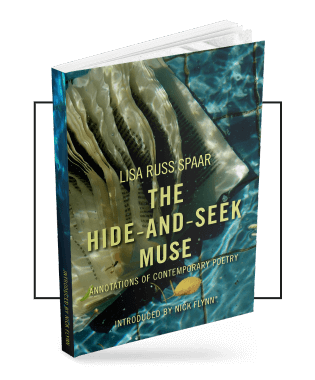
All of us here at Drunken Boat are very excited about our next book, The Hide-and-Seek Muse: Annotations on Contemporary Poetry. THASM_cvrs2The book features Lisa Russ Spaar’s fabulous essays on the contemporary poets listed below.

To support the promotion of the book, we’ve launched a Kickstarter campaign to raise $2,000 by the end of the year, and we’re already a 1/4th of the way there! Please help us make this campaign a success by making a tax-deductible donation to our campaign. You can also help us by sharing the campaign with your friends and followers on Facebook and Twitter:
http://www.kickstarter.com/projects/1721544611/the-hide-and-seek-muse-annotations-on-contemporary.

Contributors:
Kazim Ali ~ Debra Allbery ~Talvikki Ansel ~ Jennifer Atkinson ~ David Baker ~ Jill Bialosky ~ Suzanne Buffam ~ Jennifer Chang ~ Ye Chun ~ Michael Collier ~ Randall Couch ~ Stephen Cushman ~ Kate Daniels ~ Kyle Dargan ~ Claudia Emerson ~ Monica Ferrell ~ David Francis ~ Gabriel Fried ~ Alice Fulton ~ Rachel Hadas ~ Brenda Hillman – Edward Hirsch ~ Jane Hirshfield ~ Mark Jarman ~ Laura Kasischke ~ Jennifer Key ~ L. S. Klatt ~ Joanna Klink ~ Hank Lazer ~ Paul Legault ~ Willie Lin ~ Maurice Manning ~ Cate Marvin ~ Heather McHugh ~ Erika Meitner ~ Carol Muske-Dukes ~ Amy Newman ~ Meghan O’Rourke ~ Eric Pankey ~ Kiki Petrosino ~ Carl Phillips ~ John Poch ~ Bin Ramke ~ Srikanth Reddy ~ Michael Rutherglen ~ Mary Ann Samyn ~ Philip Schultz ~ Sarah Schweig ~ Allison Seay ~ Ravi Shankar ~ Ron Slate ~ R. T. Smith ~ Larissa Szporluk ~ Mary Szybist ~ Brian Teare ~ William Thompson ~ David Wojahn ~ Charles Wright

Warmly,
Michele Battiste
Director of Development

PS  Today is #GivingTuesday, a national movement of individuals, communities, and families sharing small and large acts of giving. People are joining forces to support nonprofit organizations all across the country. Please consider becoming a part of this movement by donating today!

Bookmark and Share

Published Nov 27, 2012 - Comments Off

« Go forward into the future

Go further into the past »